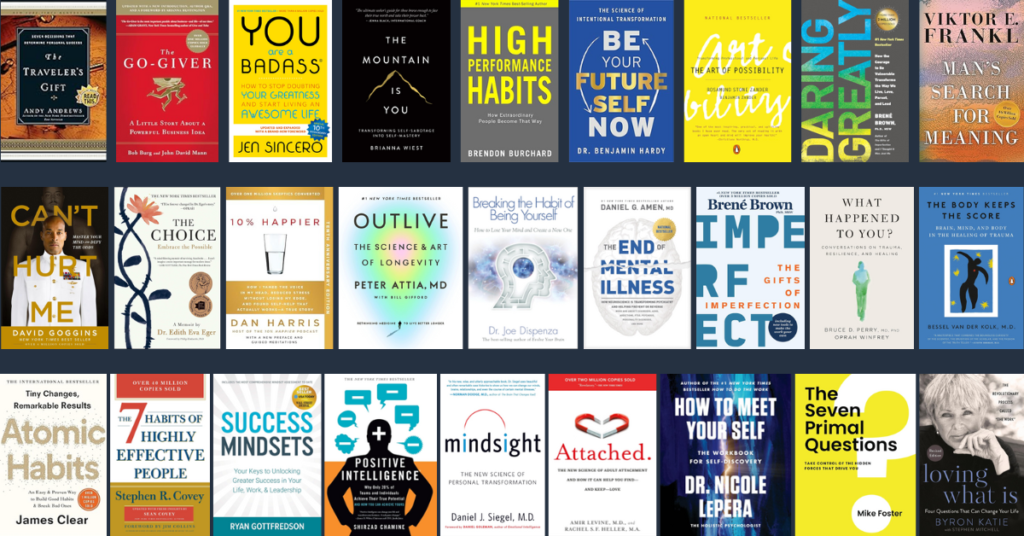
There is a quiet, incredibly fierce magic that happens when you open the right books at the exact moment you need it. It isn’t just about black ink on white paper; it’s about a direct, unfiltered conduit into another human mind. A truly phenomenal book doesn’t just fill your head with facts; it actively disrupts the way you view your own existence, gives you the psychological scaffolding to climb out of your deepest ruts, and whispers that you are capable of becoming someone much larger than you currently are.
While the word “success” gets thrown around a lot—meaning a million different things depending on who you ask—genuine, bone-deep personal growth sits at the absolute center of anything worth achieving. Whether you are trying to break out of a prison of self-doubt, re-engineer your career path, stop fighting your own daily routines, or simply find a way to breathe a little easier every day, a book can become a quiet, remarkably steady anchor on that messy journey.
The titles stitched into this guide have disrupted the lives of millions of people worldwide not because they offer flashy shortcuts, but because they deal in raw, timeless human truths that don’t care about your age, your bank account, or your background. Whether you are standing at the absolute starting line of your personal development or just looking for a spark to reignite a tired mindset, these pages can help you anchor your confidence, fix your habits, and close the gap between the life you live and the life you want.
Why Reading Supports Personal Growth
Reading is perhaps the single highest-leverage investment you can make in your own life. Think about the sheer asymmetry of it: a human being spends twenty years stumbling through life, making catastrophic mistakes, fighting through crises, and synthesizing everything they learned into a cohesive philosophy. Then, they write it down, and you can buy that hard-earned wisdom for the price of a standard lunch. It is a cheat code for human experience. Instead of having to touch every hot stove yourself to learn what burns, you can build on top of the psychological foundations laid down by the minds that walked before you.
Books act as an unblinking mirror, forcing us into deep self-reflection. They have a funny way of highlighting the exact self-sabotaging behaviors we try to hide from our friends and family, while simultaneously handing us the precise, practical toolkits needed to dismantle them. Over time, this slow, steady drip of insight radically alters the way you make decisions, navigate internal emotional storms, communicate with the people you love, and chase down your ambitions. Furthermore, the physical act of reading is an act of rebellion in a hyper-distracted digital world. It forces your attention span to heal, training your brain to focus, think deeply, and sit with a single, profound idea without constantly reaching for the next hit of digital noise.
Think and Grow Rich by Napoleon Hill
People trapped in a fixed mindset treat every failure as a devastating verdict on their personal worth, causing them to play safe and hide from challenges. Conversely, those who cultivate a growth mindset see friction, criticism, and failure as essential fuel for learning. Dweck traces these mindsets through classrooms, corporate boardrooms, sports arenas, and intimate relationships, proving that the simple belief that you can improve completely changes the trajectory of your potential.
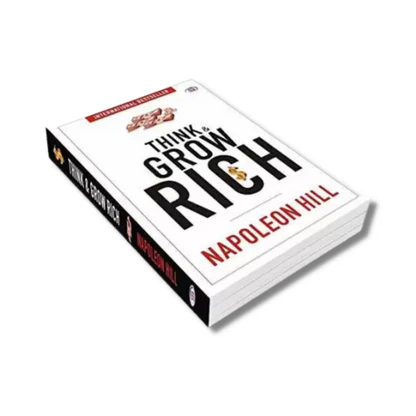
Do not let the unapologetically materialistic title fool you. While Napoleon Hill’s legendary text uses financial wealth as its primary case study, Think and Grow Rich is fundamentally a deep psychological interrogation of human desire, belief, and willpower. Born out of a multi-decade project analyzing the psychological profiles of history’s most formidable wealth-builders, the book exposes the hidden engine behind any major human achievement.
Hill demonstrates that before anything can materialize in the physical world, it must first be obsessively constructed within the theater of your own mind. It’s a masterclass in developing a burning definiteness of purpose, cultivating a level of self-belief that borderlines on defiance, and keeping your internal fire lit through waves of public failure and private doubt. The true wealth Hill teaches you to grow is a resilient, bulletproof relationship with your own mind.
The Power of Now by Eckhart Tolle
We live in an age of intense chronological sickness. Our minds are perpetually trapped in a time that doesn’t exist—either agonizing over old mistakes in a past we cannot change, or projecting catastrophic scenarios into a future we cannot predict. Eckhart Tolle’s The Power of Now acts as a sudden, shocking bucket of ice water to our collective spiritual amnesia.
Every single day, you are making a silent choice between two entirely different realities, and Carol Dweck’s groundbreaking research exposes exactly how that choice dictates your entire life path. She introduces the brilliant paradigm of the fixed mindset versus the growth mindset.
“A fixed mindset believes your talents and intelligence are carved in stone. A growth mindset understands that your current capabilities are merely the starting line for what effort, strategy, and dedication can build.”
The Four Agreements by Don Miguel Ruiz
His life story is living proof of his “40% Rule”—the idea that when your mind tells you that you are completely empty, exhausted, and broken, you have actually only tapped into about forty percent of your true physical and mental capacity. Goggins writes with a raw, unvarnished intensity that challenges you to look into your own mirror, take absolute accountability for your circumstances, and step directly into the physical discomfort required to calluses your mind against adversity.
The book lays out four deceptively simple agreements you can make with yourself to instantly shatter that conditioning: be impeccable with your word, don’t take anything personally, don’t make assumptions, and always do your best. It is a stunningly concise guide to interpersonal communication, emotional intelligence, and reclaiming your personal freedom without overcomplicating the human experience.
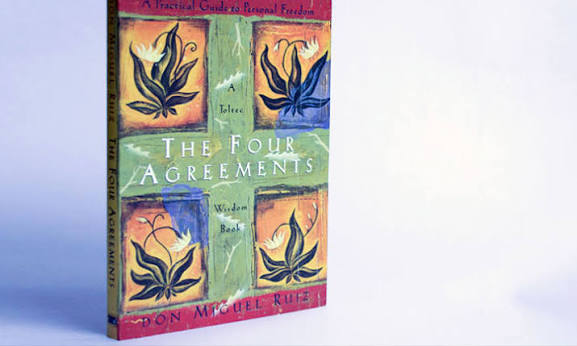
In stark contrast to the high-adrenaline intensity of Goggins, Don Miguel Ruiz offers a short, beautifully poetic sanctuary of a book rooted in ancient Toltec wisdom. Ruiz argues that from the moment we are born, we are conditioned into a series of invisible, self-limiting agreements with society that dictate how we see ourselves and how we suffer.
Manson shifts the conversation from “how can I avoid problems?” to “what are the specific problems I am willing to suffer for?” Written with a sharp, hilarious, and deeply empathetic tone, the book encourages you to stop looking for everyone else’s permission slip. It forces you to look at your limited time on this planet, accept your flaws, and focus your finite emotional energy exclusively on values that actually build a meaningful life.
How to Read for Maximum Growth

There is a massive difference between consuming a book and actually letting it change your life. Too many people treat reading like a vanity metric, rushing through dozens of titles a year just so they can log them on an app or brag about them on social media.
If you hit a paragraph that makes your stomach drop or forces you to question a long-held belief, stop reading. Close the book. Sit with that discomfort for five minutes. Keep a pen in your hand while you read—interrogate the text, scribble counterarguments in the margins, highlight sentences that feel like revelations, or write about how a specific chapter maps directly onto your current life dilemmas.
Instead, it proves that your life is simply the physical manifestation of your daily systems. Clear diagnoses exactly why we fail at making good habits stick and why bad routines are so incredibly hard to kill, providing a beautifully practical blueprint for engineering your environment so that good behavior becomes the path of least resistance. It’s a book that doesn’t ask you to be a hero; it just asks you to fix your systems.
Building a Reading Habit

The most common excuse people make for not reading is that they simply don’t have the time. But if you check the screen-time trackers on our phones, most of us have plenty of time; we’ve just chosen to let it be stolen from us in five-minute increments of mindless scrolling. Building a reading habit isn’t about clearing out three hours of uninterrupted quiet time every afternoon; it’s about claiming the small pockets of your day.
If you commit to reading just ten pages a night before you turn off the lights, you will easily finish around twelve to fifteen books a year. Keep a physical book in your backpack, or download an e-reader app onto your home screen right where your social media apps used to live. The moment you find yourself waiting in a long line or sitting on a train, choose to open a page instead of checking your feed. Your goal shouldn’t be speed or volume. The goal is to build a consistent, quiet space in your daily life where your mind can feed on something substantial.
Success Begins with Self-Growth
We live in a culture that is utterly obsessed with external results. We want the thriving business, the shredded physique, the perfect relationship, and the flawless public reputation, but we routinely forget that these things are merely trailing indicators of who we are internally. You cannot build a massive, enduring structure on top of a fragile, unexamined foundation. Real, sustainable success doesn’t happen when you chase it down directly; it happens as a natural byproduct of personal growth.
When you invest the time to fix your communication skills, sharpen your emotional intelligence, build a stubborn daily discipline, and anchor your confidence in reality, you are upgrading your underlying operating system. Books provide an incredible, time-tested roadmap, but it is your small, quiet, daily actions that ultimately move the needle. The wisdom locked within these pages only becomes valuable the moment you choose to shut the cover, step away from your desk, and actively live out the truths you just read.
If you keep your ear to the ground in any personal development space, you will hear one title mentioned like a mantra: Atomic Habits. The explosive success of James Clear’s work lies in the fact that he completely liberates the reader from the crushing pressure of needing a massive, overnight life transformation. Instead, Clear turns his focus to the microscopic—explaining how a mere one-percent improvement, repeated with stubborn consistency day after day, compounds into something absolutely staggering over the long haul.
FAQ’S
1. What are the best books for self-growth?
Popular choices include Atomic Habits, Mindset, The 7 Habits of Highly Effective People, and The Power of Now.
2. How can self-growth books improve my life?
They help you build better habits, develop a positive mindset, and improve personal and professional skills.
3. How often should I read personal development books?
Reading for 15–30 minutes daily is enough to build knowledge and support continuous growth.
4. Which book is best for building better habits?
Atomic Habits by James Clear is widely recommended for creating lasting positive habits.
5. Can reading self-growth books lead to success?
Yes, applying the lessons consistently can improve confidence, productivity, decision-making, and long-term success.